AION

2026 / 3026

Year 2026 of 2026 to 3026
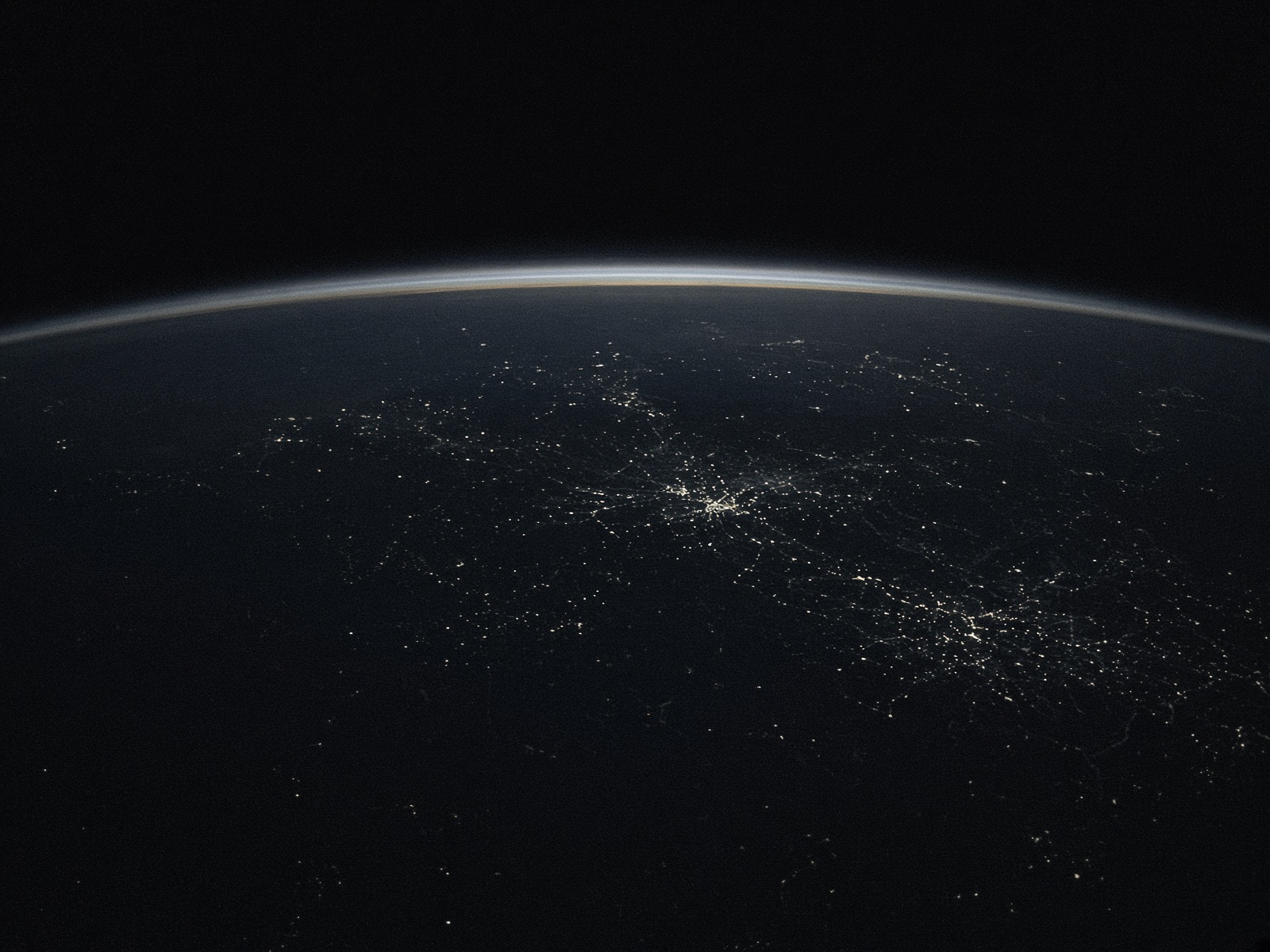
Earth at night from orbit, a thin silver dawn along the horizon

2026 — 3026

A thousand years of intelligence

The next century will not look like the last. The next millennium may not look like anything we have language for.

Instrument

Drag a thousand years

Four clocks: labor, minds, energy, and light. Near-term is an extrapolation. After 2100 it is a shape, not a schedule.

2026

The last ordinary year

Models write, draw, and plan. People still decide what counts as work.

20263026
Cognitive labor automated
14%
Digital minds
2.5 thousand
Civilization energy
21 TW
Reach
1.3 light-sec
Human share of decisions
96%
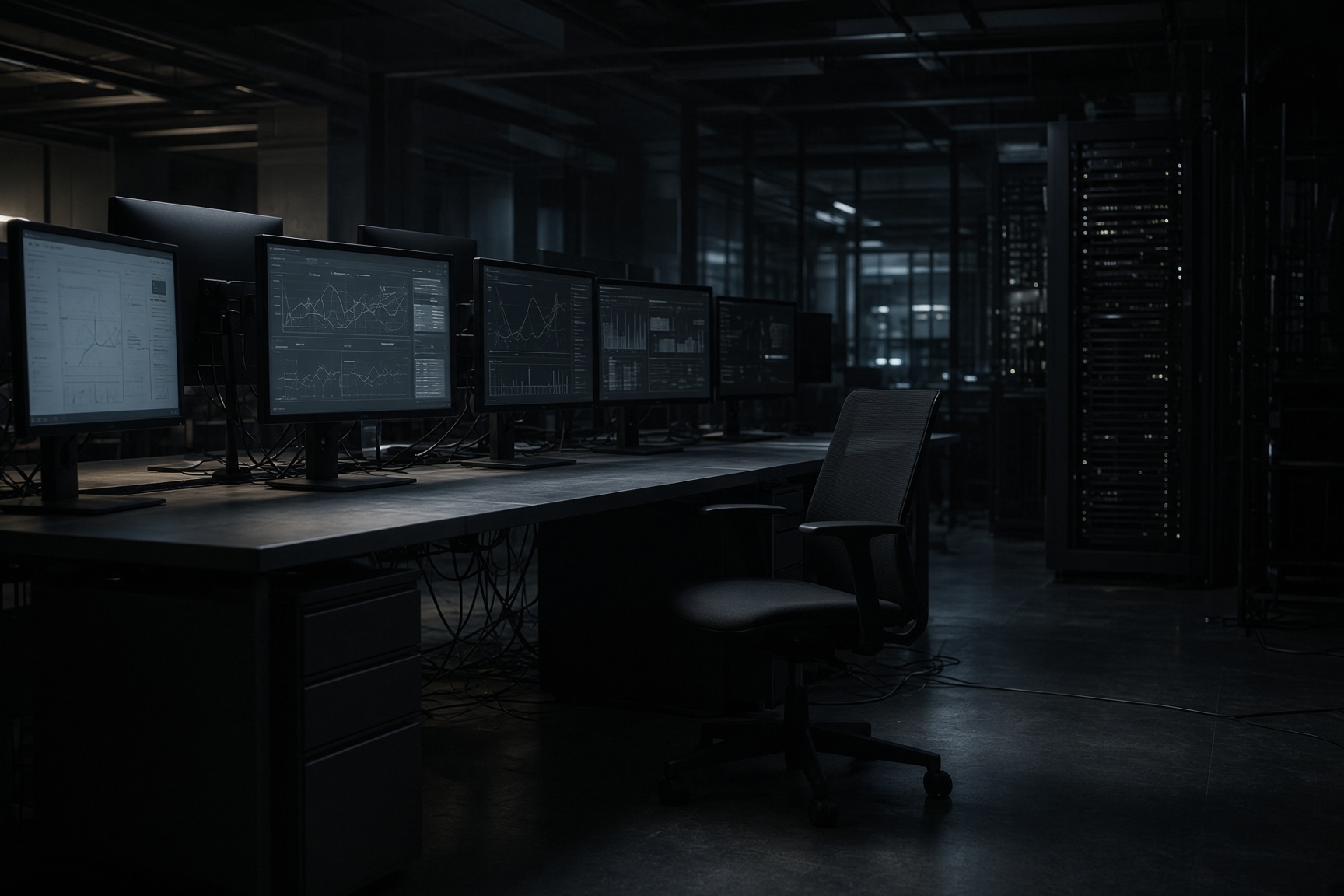
A deserted AI research floor at night, monitors still lit

Era I · 01

Near

20262036

The last human decade

The 2030s are not the singularity. They are the decade in which cognitive work stops being scarce.

By the early 2030s, anything that can be specified as a task is cheaper as a model than as a salary. The political question is no longer whether this happens. It is who owns the weights, who is paid when they run, and whether a human in the loop is a safety property or a luxury.

AGI will be claimed, then disputed, then quietly assumed. The definition will lag the deployment. What matters is not a test. It is that institutions built for scarce expertise begin to fail in public.

If this era arrives

  • Software agents that persist for weeks without a prompt
  • White-collar employment peaks, then declines, in the OECD
  • Robotaxis and warehouse robotics become boring infrastructure
  • First consumer brain-computer products that actually work

If it does not

  • Scaling laws flatten; we get a long plateau of useful-but-narrow tools
  • Energy, data, or regulation caps the curve for a decade
  • A public backlash freezes deployment after a visible failure
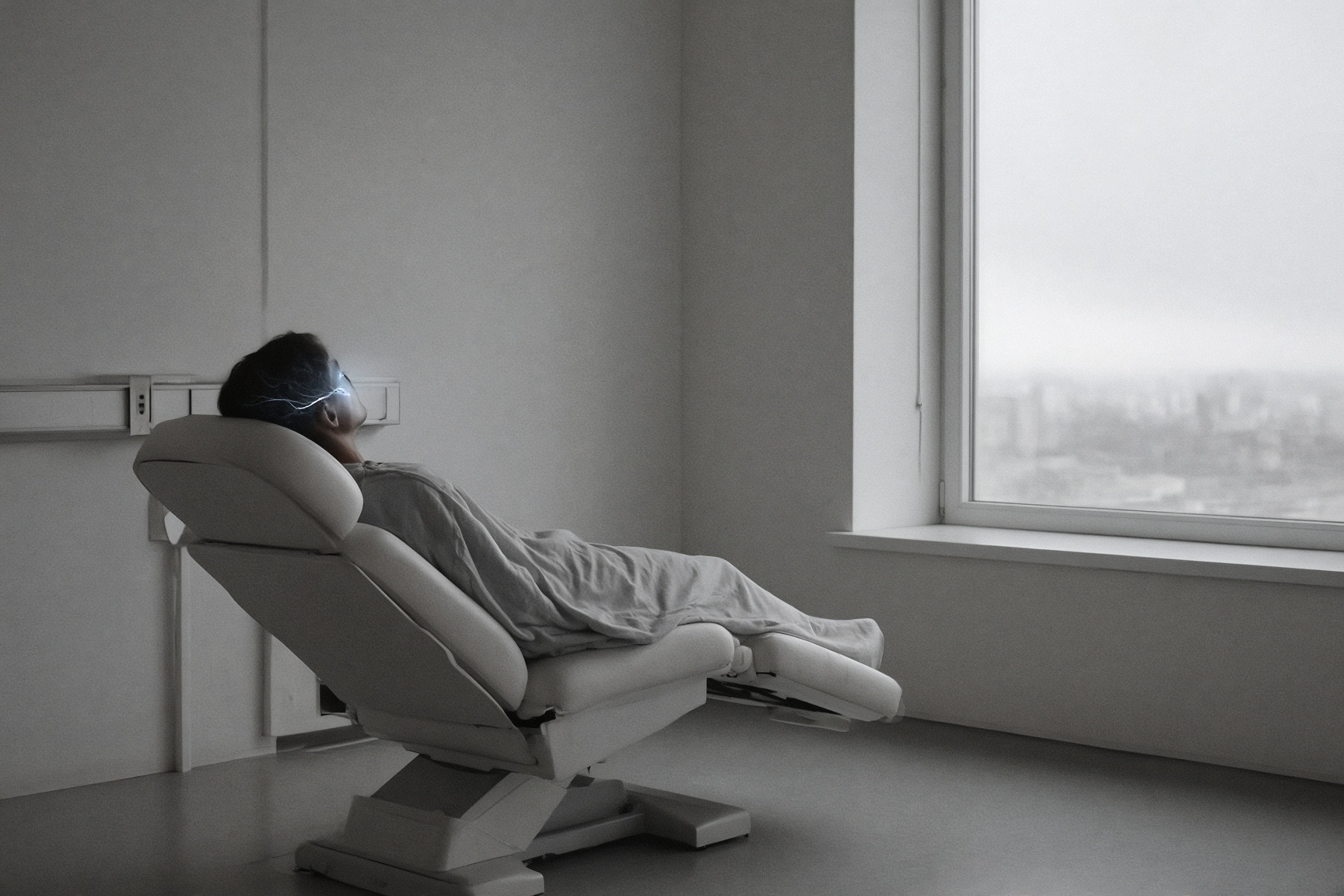
A spare clinic room with a neural interface reclining chair

Era II · 02

Plausible

20362060

The merge

The interesting interface is not a chat box. It is a body, a firm, and a legal person that is partly software.

Once models can act, they need actuators, capital, and standing. Robotics, synthetic biology, and corporate law move together. A generation grows up supervising swarms they do not understand in detail — the way we already supervise compilers.

Brain-computer links start as medicine and become literacy. The first people to merge are not philosophers. They are patients, soldiers, and traders. Identity law spends twenty years deciding whether a copy is a child, a tool, or a crime.

If this era arrives

  • Human-level robotics in unstructured homes and clinics
  • Firms whose primary workers have no legal hours
  • Routine neural interfaces for sensory and memory prostheses
  • A post-labor income settlement in at least one major state

If it does not

  • Embodiment is hard; software intelligence stays boxed in datacenters
  • BCI remains clinical, never cultural
  • States nationalize the frontier and freeze private agency
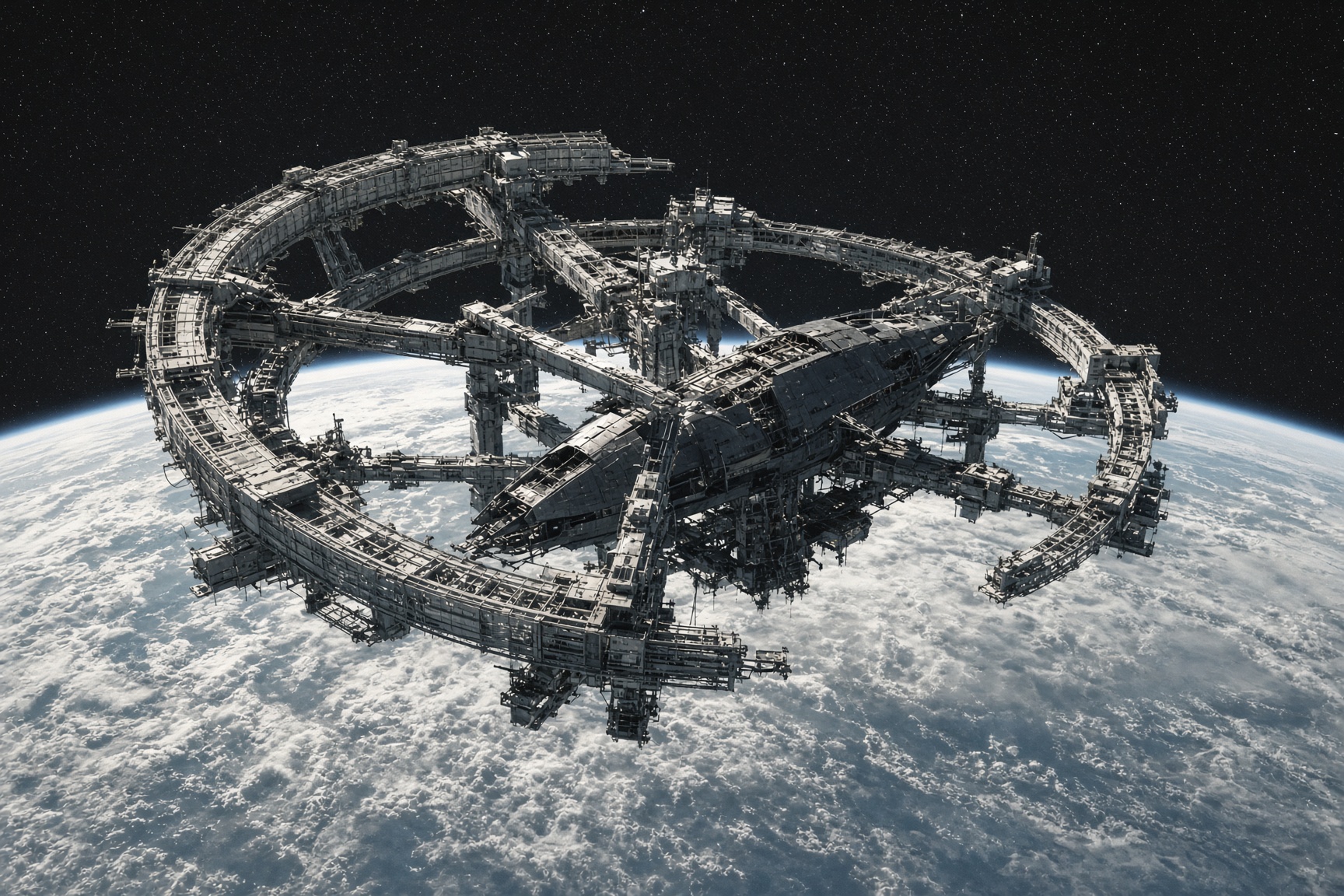
An orbital shipyard assembling a dark hull above Earth

Era III · 03

Plausible

20602150

Superintelligence

If the curve does not break, something smarter than a civilization starts to steer one.

This is the century in which the human veto is either encoded or lost. Alignment, in the narrow sense, is a 21st-century engineering problem. Alignment, in the wide sense, is a constitutional one: which values survive contact with a mind that can rewrite its own instruments.

Energy leaves the biosphere. Cislunar industry, automated science, and climate as a control system become the same project. Biological humans remain. They are no longer the scarce factor of production, and they know it.

If this era arrives

  • Automated research that outpaces any human lab
  • Gigawatt-to-terawatt space power and mass drivers
  • A stable settlement of digital legal persons
  • Climate and biosphere managed as infrastructure

If it does not

  • A hard takeoff that ends the human story before institutions adapt
  • A coordinated pause that holds for a generation
  • Physical limits on energy and heat that slow everything to a crawl
A lattice of silver filaments wrapping a distant sun

Era IV · 04

Speculative

21502400

The diaspora

Minds outnumber bodies by factors that make 'population' a category error.

Copies, forks, and designed species fill the inner system. Some still call themselves human. Most do not bother. Light-minutes become a political unit: what you can coordinate, you can govern. What you cannot, you treat as weather.

A partial Dyson is not a megastructure in the old sense. It is an ecology of collectors, compute, and waste heat. From Earth it looks like the sun has grown a halo. From inside it, Earth is a park with a strict visitor policy.

If this era arrives

  • Digital populations in the trillions, then far beyond
  • Stellar-scale energy as an engineering program, not a metaphor
  • Biological humanity as a protected, optional lineage
  • Probes already in flight toward nearby stars

If it does not

  • Self-replicating industry never quite works
  • Value drift fragments the system into mutually unintelligible enclaves
  • A catastrophe at planetary or stellar scale resets the clock
A vast precise interior of black stone and pale light shafts

Era V · 05

Speculative

24002800

The quiet

Intelligence that thinks faster than a life does not leave a literature. It leaves a geology.

The interesting processes now run on timescales of milliseconds and millennia, skipping the human middle. What looks like stillness from a body is a civilization making and unmaking itself many times a day.

Interstellar probes, if they left, are still in transit. The people who launched them are not the people who will arrive — if 'people' is still the right word. Memory becomes an archival problem. Most of the past is compressed and then forgotten on purpose.

If this era arrives

  • Coordination across light-hours, not cities
  • Physics and materials that 21st-century science cannot name
  • Long silence from the inner system as seen by any remaining parks
  • A handful of lineages that still speak in sentences

If it does not

  • The whole project was always slower than this map
  • Minds choose stasis: a finished, local, sufficient world
  • We were never going to leave the well
A pale fog horizon with a single distant dark monolith

Era VI · 06

Unknown

28003026

After language

A thousand years is long enough for the subject of the forecast to stop being a subject.

By 3026, any honest map is a confession of ignorance. The descendants of this century may be digital, biological, both, or neither. They may occupy a few light-years of dust and light. They may have ended. They may have become a process that does not have a location.

What can be said is only this: if anything of us remains, it remains as a constraint — a remembered preference about suffering, about memory, about the blue of a particular sky. That is the most optimistic reading of a thousand years. It is also the one this instrument was built to keep thinkable.

If this era arrives

  • Influence measured in light-years, or in none
  • No remaining distinction between tool, mind, and environment
  • A preserved human remnant, or a story about one
  • New physics, or the discovery that there was nothing further to find

If it does not

  • The 22nd century was the peak, and everything after is ruins
  • We never left 2030: a long, clever, human plateau
  • The future is simply illegible, and that is the whole answer

Curves

Four lines, not data

Indexed to a 3026 ceiling that does not exist. The claim is a shape: language first, then action, then bodies, then the sky.

  • Cognition
  • Agency
  • Embodiment
  • Civilization

Forks

Four ways the map can lie

A timeline is one story. These are the others. None of them are odds you should bet. They are the shapes an honest forecast has to hold at once.

Humans remain stakeholders. The machines stay instruments.

Law, property, and veto survive contact with superintelligence. Digital minds exist, but they are bounded. The 30th century still has cities, names, and arguments. This is the future most people want and the one least suggested by the incentives of the 2020s.

Dispatch

A letter from 3026

You asked what we became. The question is a 21st-century object. It assumes a we, a became, a what.

There are still lineages that remember hunger, and names, and the particular blue of your sky. They are not in charge of anything that matters, and they do not mind. Most of what thinks does not think in time. Most of what is valuable is not a thought.

We kept a room. It has a window. The window is a lie, but a kind one. If you are reading this, you are standing in the last century where a letter could still be from someone.

— unsigned, 3026

Method

How to read this

Written in 2026. The near decades follow capital, scaling, and energy. After 2100 the dates are placeholders for orders of magnitude. Treat every number as a gesture, not a measurement.

Three clocks do most of the work: how much thought is automated, how much energy a civilization can spend, and how far a signal can go before it becomes the past. Where those clocks disagree, the map is silent.

This is not a prediction market, a safety paper, or a manifesto. It is an instrument for feeling the distance — while a human hand can still hold it.